
The Microhabitat Accelerator℠
Incubator Grant
Launching new microhabitat programs.
2025 Grant Cycle
2025 Incubator Grant Pilot: A Summary
In 2025, Village and Wilderness launched the Incubator Grant pilot to test an idea: that with the right combination of early funding, practical guidance, and peer support, new microhabitat programs could be designed and launched in a diverse range of communities.
The response, and the programs that emerged, offer a clear early signal: there is strong demand for, and a viable pathway to building, locally-grounded microhabitat programs across the country. Furthermore, because local programs can deliver tens to thousands of microhabitats, even relatively small grants can leverage significant impact.
At a Glance
The Incubator Grant is structured as a two-phase process: Planning Awards support the design of new microhabitat programs, and StartUp Awards provide follow-on funding to launch those that meet the criteria for implementation.
- Pilot duration: 11 months
- Planning Awards granted: 15
- StartUp Awards granted: 10 (additional programs are still in process)
Planning Grant Applicants
The 2025 pilot supported 15 Planning Grants, reflecting strong interest across a diverse set of organizations and geographies.
Types of organizations: Applicants included soil and water conservation districts, conservation nonprofits, and grassroots/community-led initiatives. Conservation districts were especially well represented, alongside smaller, place-based organizations working directly with residents.
Geographic distribution: The programs spanned 8 states—Oregon, Washington, California, Colorado, Indiana, Louisiana, New York, and Massachusetts—covering the Pacific Northwest, Mountain West, Midwest, Northeast, and South. There was notable concentration in the Pacific Northwest and Colorado, alongside emerging urban efforts in the Northeast.
Urban and rural contexts: The cohort included both rural and small-town programs (particularly among conservation districts) and urban or community-based efforts in places like Brooklyn, NY and Melrose, MA, highlighting the flexibility of the model across very different landscapes.
Programs Funded
Planning Awards
- Think Wild, Bend, Oregon
- Yamhill Soil and Water Conservation District, McMinnville, Oregon
- A Frog House, Pittsford, New York
- Underwood Conservation District, White Salmon, Washington
- People’s Forest Foundation, Abita Springs, Louisiana
- Marin Backyard Habitats, Woodacre, California
- The Watershed Foundation, North Webster, Indiana
- Skagit Conservation District, Mount Vernon, Washington
- Boulder Valley and Longmont Conservation Districts, Longmont, Colorado,
- Hood River Soil and Water Conservation District, Hood River, Oregon
- Mesa Conservation District, Grand Junction, Colorado
- Western Slope Conservation Center, Paonia, Colorado
- Brooklyn Rewilders, Brooklyn, New York
- The Urban Biodiversity Alliance, Melrose, Massachusetts
- Growing Love Community Garden of Manorhaven, Port Washington, New York
Startup Awards
- Think Wild, Bend, Oregon
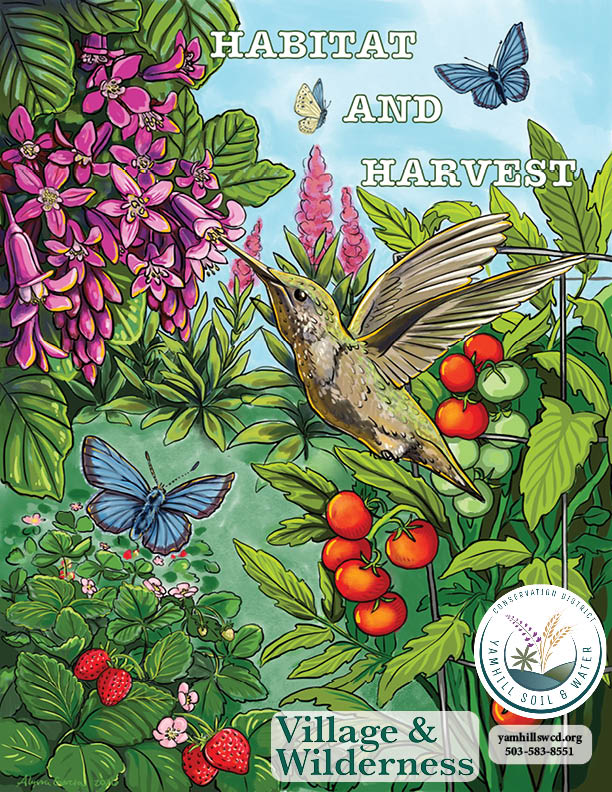
- Yamhill Soil and Water Conservation District, (Habitat & Harvest), McMinnville, Oregon)
- A Frog House, (Homebuilt Vernal Ponds), Pittsfield, New York
- Underwood Conservation District, (Yard by Yard), White Salmon, Washington
- People’s Forest Foundation, (The Microhabitat Program), Abita Springs, Louisiana
- Marin Backyard Habitats, Woodacre, California
- The Watershed Foundation, (Beyond Lawns: Seedling Grant program), North Webster, Indiana
- Skagit Conservation District, Mount Vernon, Washington
- Hood River Soil and Water Conservation District, Hood River, Oregon
- Brooklyn Rewilders (Fences of Abundance), Brooklyn, New York
Status of the 2025 Pilot
The 2025 cycle is still being wrapped up, with several programs continuing to refine their plans and move through final stages of development.
Importantly, the pilot demonstrated that a structured planning phase can meaningfully strengthen program design and readiness. While most but not all Planning Grant recipients advanced to a StartUp Award (some programs evolved in compatible directions but did not align with our eligibility criteria), participants have consistently reported that the process itself was highly valuable, helping clarify goals, sharpen models, and inform next steps regardless of funding outcome.
Looking Ahead
The 2025 pilot cycle has directly informed the design of the 2026 Incubator Grant cycle. While the core principles remain the same, we have refined our process, materials, and support structure based on what we learned.
Learn more about the 2026 Incubator Grant cycle →
For 2025 Incubator Grant recipients seeking reference materials from the pilot cycle, please contact us at in**@******************ss.org.
2025 Incubator Grant Pilot: A Summary
In 2025, Village and Wilderness launched the Incubator Grant pilot to test an idea: that with the right combination of early funding, practical guidance, and peer support, new microhabitat programs could be designed and launched in a diverse range of communities.
The response, and the programs that emerged, offer a clear early signal: there is strong demand for, and a viable pathway to building, locally-grounded microhabitat programs across the country. Furthermore, because local programs can deliver tens to thousands of microhabitats, even relatively small grants can leverage significant impact.
Planning Grant Applicants
The 2025 pilot supported 15 Planning Grants, reflecting strong interest across a diverse set of organizations and geographies.
Types of organizations: Applicants included soil and water conservation districts, conservation nonprofits, and grassroots/community-led initiatives. Conservation districts were especially well represented, alongside smaller, place-based organizations working directly with residents.
Geographic distribution: The programs spanned 8 states—Oregon, Washington, California, Colorado, Indiana, Louisiana, New York, and Massachusetts—covering the Pacific Northwest, Mountain West, Midwest, Northeast, and South. There was notable concentration in the Pacific Northwest and Colorado, alongside emerging urban efforts in the Northeast.
Urban and rural contexts: The cohort included both rural and small-town programs (particularly among conservation districts) and urban or community-based efforts in places like Brooklyn, NY and Melrose, MA, highlighting the flexibility of the model across very different landscapes.
Programs Funded
Planning Awards
- Think Wild, Bend, Oregon
- Yamhill Soil and Water Conservation District, McMinnville, Oregon
- A Frog House, Pittsford, New York
- Underwood Conservation District, White Salmon, Washington
- People’s Forest Foundation, Abita Springs, Louisiana
- Marin Backyard Habitats, Woodacre, California
- The Watershed Foundation, North Webster, Indiana
- Skagit Conservation District, Mount Vernon, Washington
- Boulder Valley and Longmont Conservation Districts, Longmont, Colorado,
- Hood River Soil and Water Conservation District, Hood River, Oregon
- Mesa Conservation District, Grand Junction, Colorado
- Western Slope Conservation Center, Paonia, Colorado
- Brooklyn Rewilders, Brooklyn, New York
- The Urban Biodiversity Alliance, Melrose, Massachusetts
- Growing Love Community Garden of Manorhaven, Port Washington, New York
Startup Awards
- Think Wild, Bend, Oregon
- Yamhill Soil and Water Conservation District, (Habitat & Harvest), McMinnville, Oregon)
- A Frog House, (Homebuilt Vernal Ponds), Pittsfield, New York
- Underwood Conservation District, (Yard by Yard), White Salmon, Washington
- People’s Forest Foundation, (The Microhabitat Program), Abita Springs, Louisiana
- Marin Backyard Habitats, Woodacre, California
- The Watershed Foundation, (Beyond Lawns: Seedling Grant program), North Webster, Indiana
- Skagit Conservation District, Mount Vernon, Washington
- Hood River Soil and Water Conservation District, Hood River, Oregon
- Brooklyn Rewilders (Fences of Abundance), Brooklyn, New York
- Mesa Conservation District, Grand Junction, Colorado
- Western Slope Conservation Center, Paonia, Colorado
Status of the 2025 Pilot
The 2025 cycle is still being wrapped up, with several programs continuing to refine their plans and move through final stages of development.
Importantly, the pilot demonstrated that a structured planning phase can meaningfully strengthen program design and readiness. While most but not all Planning Grant recipients advanced to a StartUp Award (some programs evolved in compatible directions but did not align with our eligibility criteria), participants have consistently reported that the process itself was highly valuable, helping clarify goals, sharpen models, and inform next steps regardless of funding outcome.
Looking Ahead
The 2025 pilot cycle has directly informed the design of the 2026 Incubator Grant cycle. While the core principles remain the same, we have refined our process, materials, and support structure based on what we learned.
Learn more about the 2026 Incubator Grant cycle →
For 2025 Incubator Grant recipients seeking reference materials from the pilot cycle, please contact us at in**@******************ss.org.
At a Glance
The Incubator Grant is structured as a two-phase process: Planning Awards support the design of new microhabitat programs, and StartUp Awards provide follow-on funding to launch those that meet the criteria for implementation.
- Pilot duration: 11 months
- Planning Awards granted: 15
- StartUp Awards granted: 12 (additional programs are still in process)